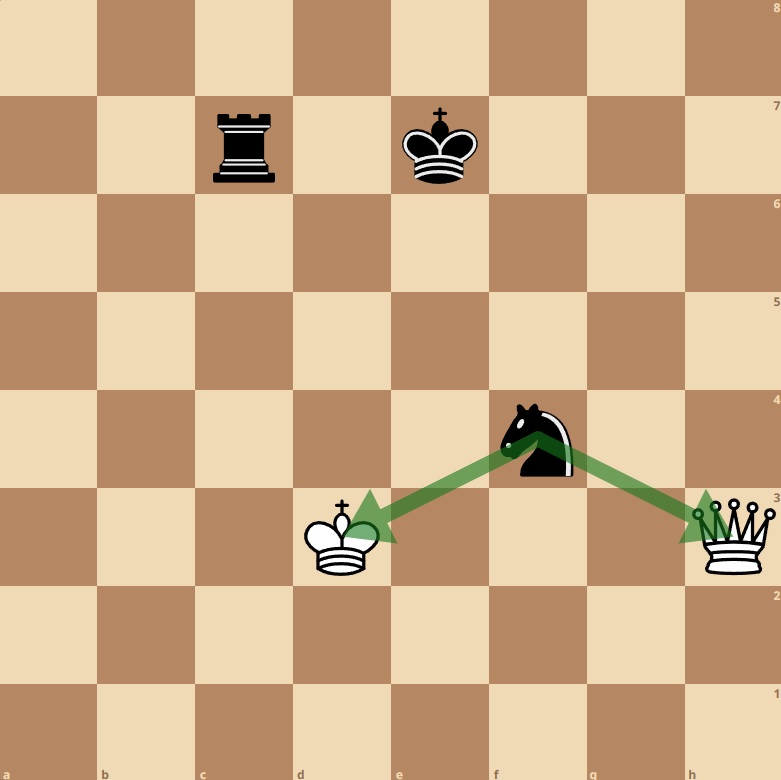
Learning tactical patterns is essential to becoming a strong chess player. Explore three fundamental tactics below.
A fork is a tactic where one piece attacks two or more enemy pieces simultaneously. Knights are especially famous for creating powerful forks.
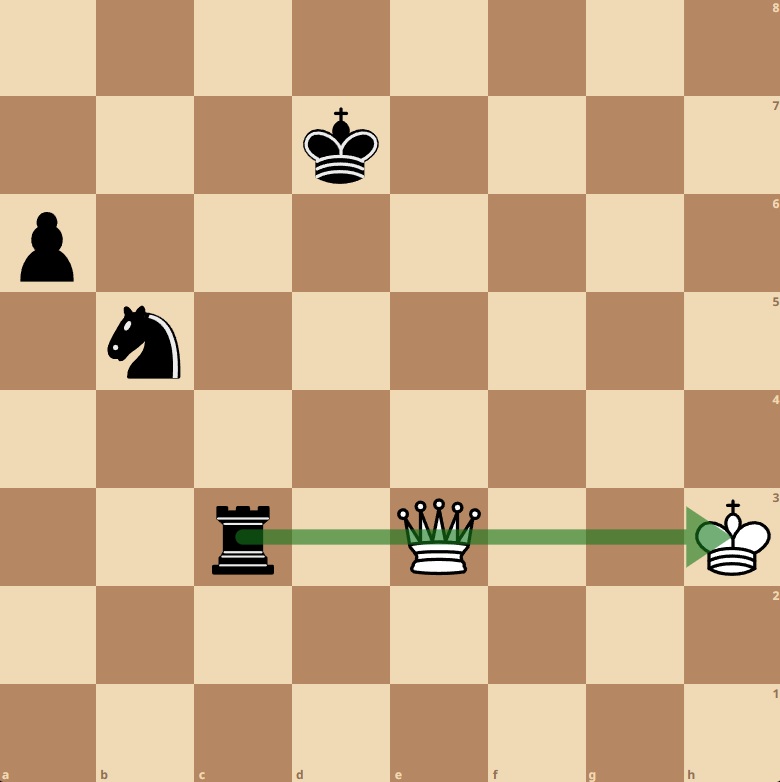
A pin occurs when a piece cannot move without exposing a more valuable piece behind it. Bishops and rooks frequently create pins.
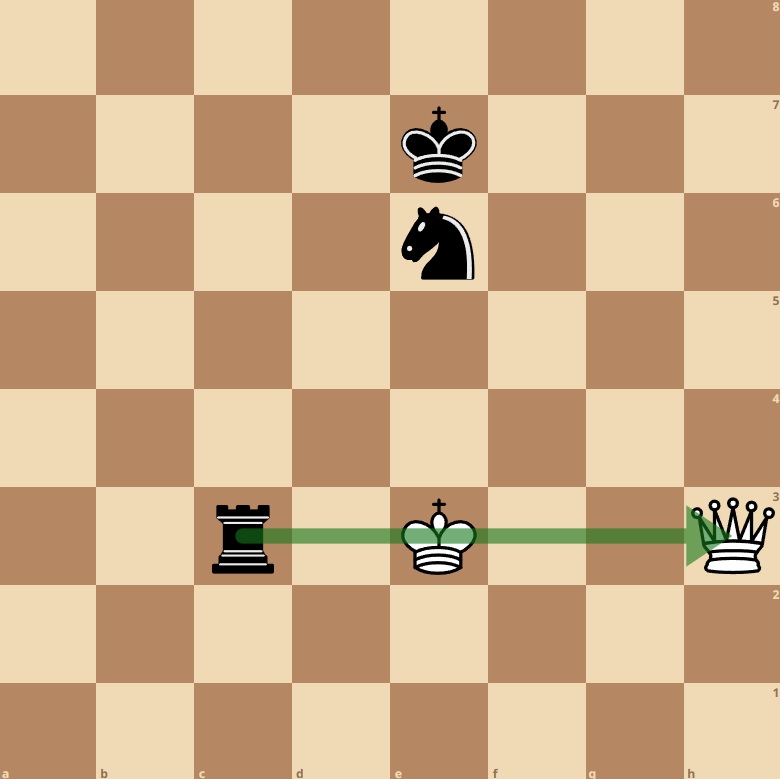
A skewer is the reverse of a pin: a more valuable piece is attacked first, and when it moves, a less valuable piece behind it is captured.
Before making any move, check which of your pieces are hanging (undefended). Avoid simple blunders and always ask yourself: “Is this move safe?”
Tactics often arise from threats. Always look for checks, captures, and attacks. Try to spot forcing moves that limit your opponent's responses.
Most tactics repeat again and again. Study forks, pins, skewers, discovered attacks, double attacks, and checkmate patterns to improve quickly.
Understanding the difference between the two is key to becoming a strong player.
Tactics are short-term sequences of moves that gain immediate advantage — usually through threats, forcing moves, and precise calculation. They include forks, pins, skewers, discovered attacks, deflection, and zwischenzugs.
Strategy is the long-term plan: improving piece activity, controlling key squares, creating weaknesses, and understanding pawn structures. Good strategy sets up positions where tactics become possible.
Beyond the basic patterns, experienced players learn advanced tactics such as: double check, deflection, interference, overloading, decoying, and back-rank motifs. These help convert small advantages into decisive wins.